


Supreme Court Upholds States' Ban on Trans Athletes From Female Sports
U.S. Supreme Court Upholds States' Ban on Trans Athletes in Girls' Sports

Published
|
Updated
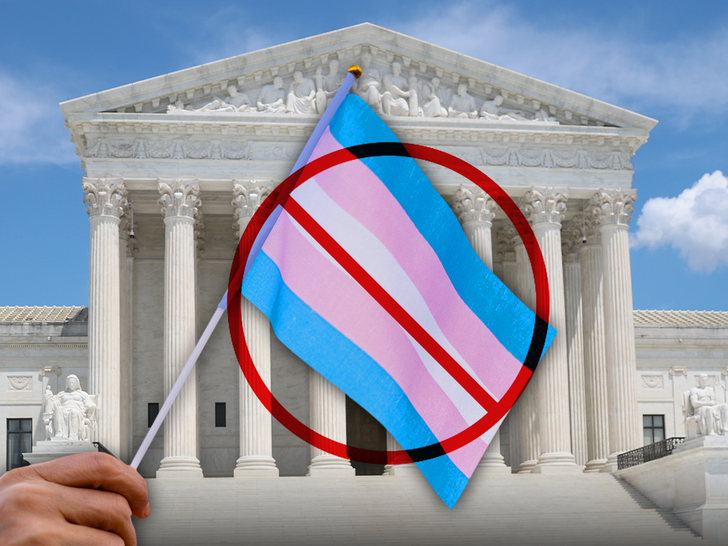
The Supreme Court just reshaped the playing field ... ruling states can bar transgender athletes from competing in women's sports.
The blockbuster decision -- handed down Tuesday -- upholds Idaho and West Virginia laws limiting school sports teams to athletes based on biological sex ... and it's poised to impact similar laws already on the books in more than two dozen states.
The ruling mirrors a growing trend, with the International Olympic Committee and a number of international athletic federations tightening eligibility rules for women's competition.
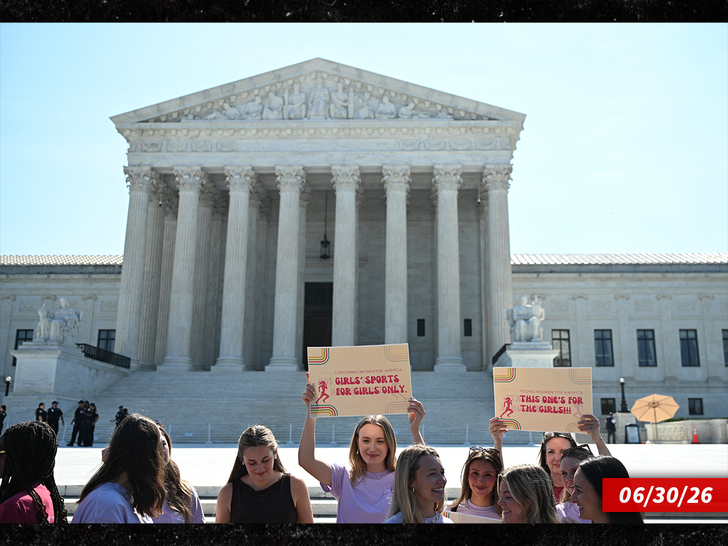
The legal fight was brought by transgender student-athletes who argued the bans violated the Constitution's Equal Protection Clause and Title IX -- the federal law barring sex discrimination in education. Lower courts had blocked the restrictions from taking effect, but the nation's highest court ultimately sided with the states and against transgender athletes.
The ruling is a huge win for supporters who say the laws protect fairness in girls' and women's sports. Critics, meanwhile, argue the bans unfairly single out transgender students and shut them out of school athletics.
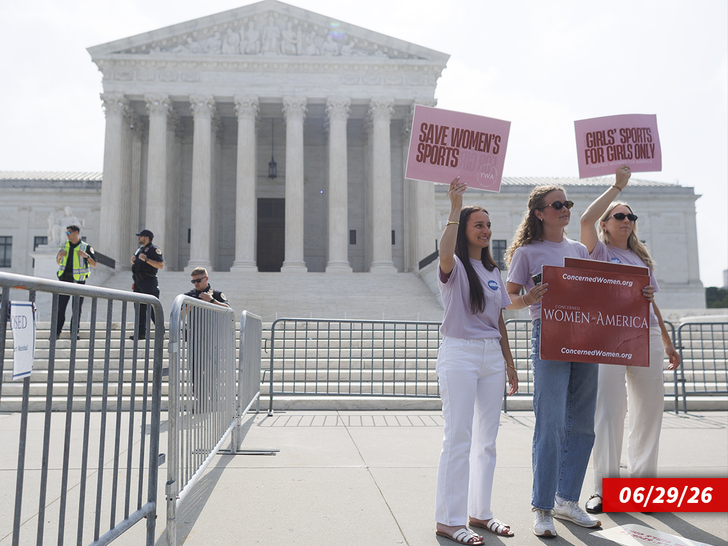
It's also another major legal victory for President Donald Trump, whose administration backed the states before the Supreme Court and has made restricting transgender participation in women's sports a key policy priority since returning to the White House.
With the ruling, the country's biggest legal battle over transgender athletes has a clear winner -- and states now have SCOTUS' blessing to keep those restrictions in place.
However, the President took an 'L' in the other major SCOTUS ruling today ... the one on birthright citizenship. The court ruled 5-4 that Trump's executive order banning birthright citizenship is unconstitutional. Justice Brett Kavanaugh agreed with the outcome, but wrote a separate concurring opinion that Congress could potentially change federal law in the future to ban it.